Why the symptom can come back
Several explanations are possible. The original water entry point may not have been identified, another roof detail may also be damaged, or the first task may only have been temporary protection. A surface treatment does not establish the condition of concealed materials beneath it.
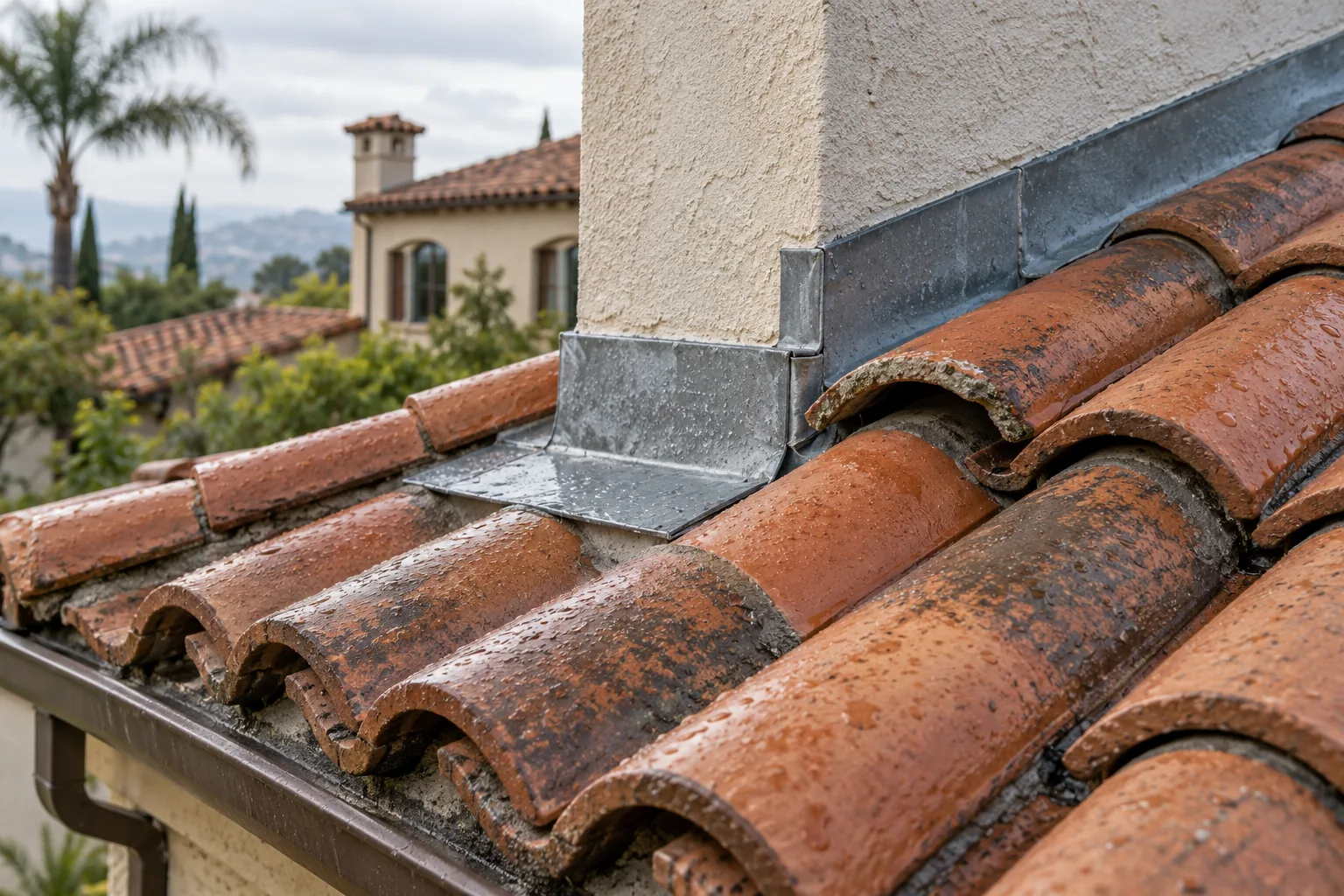
Roof penetrations, damaged coverings and flashing are recognized places for a professional investigation. These are examples to discuss, not a diagnosis of your home or proof that the earlier contractor did something wrong.
Find the original scope before drawing conclusions
Was the earlier work described as temporary protection, investigation or a completed repair? Look for the written description and any photographs. Those are different scopes, and knowing which was agreed helps you ask a more precise follow-up question.
Record when the symptom returned and whether it appeared in the same room. If the roof remained dry through some rain events, note that too. An accurate timeline is more useful than a statement that the roof has always leaked.
Ask what the next assessment will establish
Has the source been identified?
Ask how the provider connects the indoor symptom with the area they propose to work on. If their explanation is uncertain, ask what investigation is needed before a permanent scope can be recommended.
What surrounding components matter?
Roof coverings, underlayment and flashing have different roles. A proposal should make clear which component is involved and whether adjacent materials are included. General manufacturer guidance can help you understand those terms without deciding the repair yourself.
Keep a recurring symptom separate from blame
The same indoor stain can be a reason to investigate again, but it is not enough for this referral site to judge a contractor's work. Discuss the observation with the relevant provider and keep your correspondence and scope documents. Ask what they recommend next and why.
If someone recommends broader work, read questions about repair versus replacement so you can request the evidence behind that recommendation.
Explain what you need when you call
Say that there has been earlier work and that the symptom has returned. If a temporary cover is involved, explain that separately. For a tile roof, our tile repair enquiry page includes questions about the layers beneath the covering.
Fountain RoofLink can help you seek an independent provider connection. It cannot determine the cause remotely, promise a repair outcome or resolve a dispute about earlier work.
Sources & further reading
GAF: recognizing roof damage ↗GAF: roof underlayment ↗IKO: how professionals investigate roof leaks ↗General homeowner information, prepared 21 October 2026. These resources do not imply affiliation or endorsement. The provider assesses the property; the insurer decides policy coverage.